17–21 January 2027 · Georgia
GEORGE TSERODZE · ORTHODOX PRIEST · THEOLOGIAN · AUTHOR
The Future as the Source of Being
Choose what you want to do:
Read essaysShort, open texts on faith, personhood, freedom, and hope.Go to essays →Choose a courseStructured learning with text, audio, and an online meeting.View courses →Offer practical helpMeet a real need and support a person directly and transparently.See how to help →
✦Research presented at the 36th International Hegel Congress · Rome, 2026
FREE TEST · ABOUT 2 MINUTES
How personal is your way of being?
What shapes your ‘I’ — control and recognition, or gift, freedom, communion, and the future?
The test does not judge your worth, faith, or mental health.NEW ESSAY
You can be at peace with God and still find yourself in conflict
There is a kind of ‘peace’ whose price is human freedom. Christian peace does not mean accepting the order as it is. In a new essay, I ask why the peace received from God may teach us precisely to risk resistance.
THREE DIRECTIONS
The questions at the centre of the project
Personhood, Communion, and Resurrection after John Zizioulas
George Tserodze develops an original Orthodox theology of personhood, freedom, death, and hope through a critical reading of Metropolitan John Zizioulas in dialogue with Hegel and contemporary philosophy.
01
PERSONHOOD FROM THE FUTURE
How the future can disclose who a person truly is.
→02RESURRECTION BEYOND IMMORTALITY
Why Christian hope concerns the resurrection of the concrete person, not merely the survival of the soul.
→03COMMUNION AND OTHERNESS
How communion can generate personal uniqueness instead of suppressing difference.
→LATEST NEWS
All news→A REQUEST FOR HELP
ANONYMOUS · URGENT NEED
₾800 needed for essential cancer-related examinations
A woman living with a malignant tumour has been unable to undergo essential examinations for more than a year amid severe family hardship and profound exhaustion.
Read her story and help→NEW WORK BY EMAIL
Do not miss the next essay
Up to two letters a month: a new essay, lecture, or course update. No daily messages and no advertising.
A SECONDARY RESEARCH SPACE
THEOLOGY & HUMANITIES AI LAB
Thematic assistants for reading, research, and dialogue in theology, philosophy, psychoanalysis, and the humanities.
AI CONVERSATIONIrvin Yalom — The Gift of TherapyA reflective conversation about psychotherapy, presence, mortality, and the human encounter.ENTER THE CONVERSATION→George Tserodze
Biography
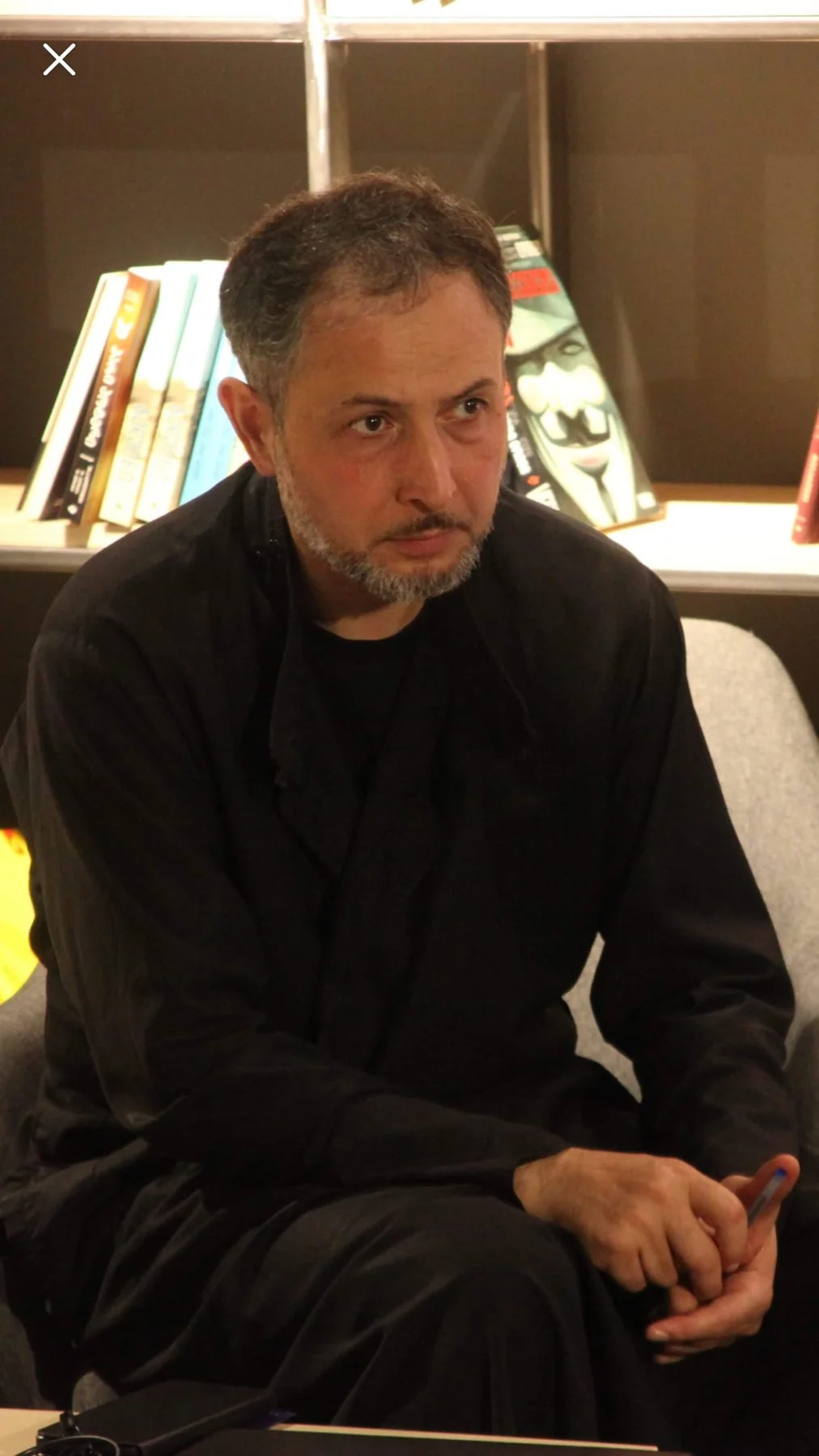
George Tserodze (b. 1972, Sukhumi) is a Georgian Orthodox archpriest, theologian, researcher, and educator. His work brings together academic theology, priestly ministry, public education, and international dialogue. His principal research interests are the theology of personhood, Eucharistic ecclesiology, eschatological ontology, and the legacy of John Zizioulas. Since 2024, he has served as editor of Zghvari: Orthodoxy and Modernity.
Biblical hermeneutics and exegesis hold an important place in his research. He brings together biblical and liturgical memory, ecclesiological vision, and ontological analysis, placing Christian tradition in dialogue with the questions of the contemporary world.
Updated Academic CVEnglish · September 2026PDF · 2 pages↓Previous CV — archiveEnglish · preserved versionPDF↓
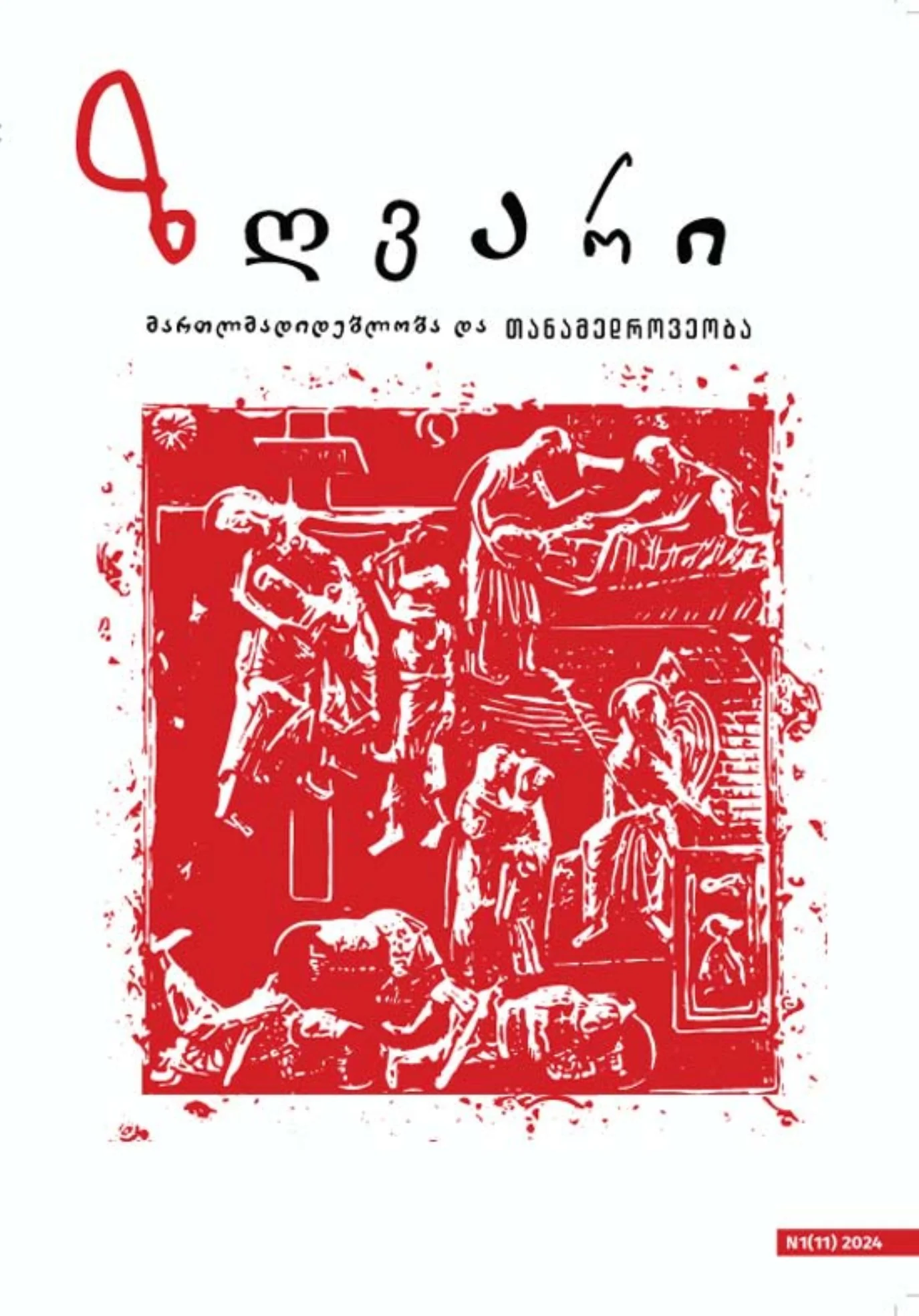 Zghvari journalRead George Tserodze’s articles in Zghvari↗
Education
Faculty of Economics, Tbilisi State University (1990–1997); Tbilisi Theological Seminary (1997–2001); completed doctoral studies in philosophy at the Faculty of Humanities, Tbilisi State University (2009–2021). His doctoral research examines the idea of theocracy in Vladimir Solovyov.
Teaching
Teacher of religious studies at Olimpi School (2002–2005); lecturer in theology at Georgian Technical University (2004–2006) and at Tbilisi Theological Seminary and Academy; visiting lecturer at Sulkhan-Saba Orbeliani University (2020–2021).
Ministry & Public Service
Worked in rehabilitation and anti-drug programmes and has served as an Orthodox priest since 2009. From 2014 to 2023 he served as a chaplain with Georgia’s Ministry of Defence. He has been a member of the Georgian Psychological Association since 2010.
International Programmes & Projects
Completed a certificate course in applied psychology (2011–2012) and a prison chaplaincy programme in the United Kingdom (2012–2013). Participated in the Shota Rustaveli National Science Foundation project ‘Anthim the Iberian—Georgian-European Dialogue’ (2015–2016) and the U.S. Department of State’s IVLP (2017). A 2018 individual award supported his direction of the Georgian edition of John Zizioulas’s Communion and Otherness. In 2019–2020 he led projects on interreligious dialogue, critical thinking, and human dignity.
International Conferences
Speaker at the European Academy of Religion (2023), Georgia and the Caucasus—Past, Present, Future (2024), Sola Forum (2025), the 36th International Hegel Congress, and an international symposium dedicated to John Zizioulas (2026).
Books, Articles & Translation
Author of Jesus’ Vision of the Neighbor: Against Hegel and Pope (2022), Resurrection Is More Than Immortality (2026), and articles in theology and philosophy. He directed the Georgian edition of John Zizioulas’s Communion and Otherness and is one of its Georgian-edition copyright holders (2019).
✦
Books
Monographs, editions, and work in progress

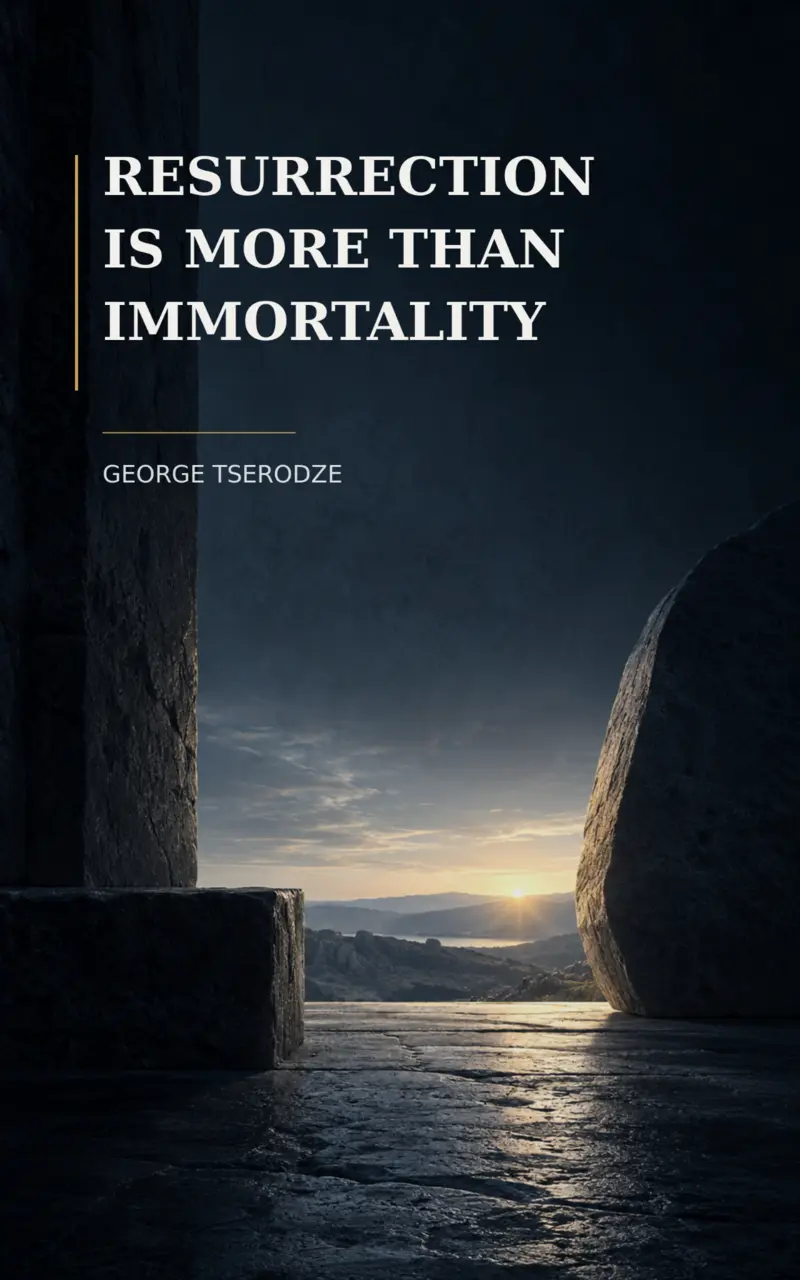
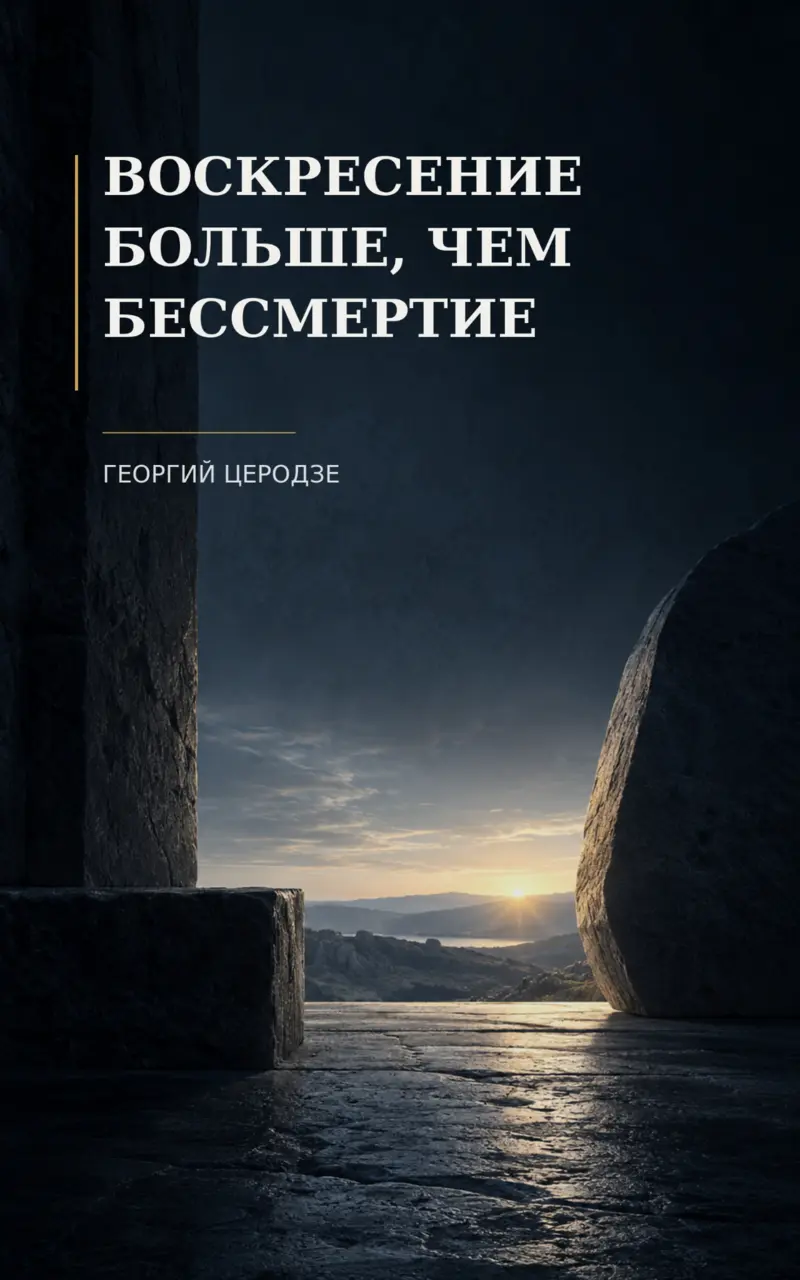
2026 · Author · Georgian, English, and Russian editions
Resurrection Is More Than Immortality
On the terror of death and Christian hope—why resurrection is more than the idea of the soul’s natural immortality.

2019 · Georgian edition copyright: George Tserodze, Tamar Goguadze, and Zurab Jashi · ISBN 978-9941-9649-2-3
Communion and Otherness
The Georgian edition of Further Studies in Personhood and the Church, edited by Paul McPartlan; translated by Tamar Goguadze and Zurab Jashi; project directed by Archpriest George Tserodze.
READERS & REVIEWERS
How the work is being received
An early theological review presents Resurrection Is More Than Immortality as a new contribution to Georgian theological discussion, especially valuing its language of hope for readers living through grief.
Average Goodreads rating across the two listed editions of George Tserodze’s earlier book on the neighbour.
View public ratings and review ↗✦
Essays
Theological thought for the public sphere
17works · 30 language versions
Theological Journey
Threshold: An Orthodox Priest’s Journey Beyond Convention
A personal theological journey through Scripture, politics, and the life of the Church.
English
Read on this site→Technology · Eschatology
Why the Technological Republic Is a Hidden Post-Christian Eschatology
A reading of Alexander Karp’s technological vision through John Zizioulas’s eschatological ontology.
English
Read on this site→Gospel · Personhood
The Elder Brother’s Crisis: Toward a Post-Patristic Reading of Luke 15
A rereading of Luke 15 in which the elder brother faces an ontological choice between reputation and communion.
GeorgianEnglish
Read on this site→Gospel · Eschatological Joy
How the Gospel Turned into Lamentation: The Tragedy of 1 Timothy 1:15
A rereading of 1 Timothy 1:15 that recovers eschatological joy from the religion of permanent guilt.
GeorgianEnglish
Read on this site→Resurrection · Liturgical Theology
Death by Death or Death in Death?
A grammatical and ontological reading of the Paschal troparion that refuses to make death God’s instrument.
English
Read on this site→Liturgy · Preaching
“In the Name of the Father”: A Theological Reconsideration of the Georgian Liturgical Formula
A theological reconsideration of opening Georgian sermons with the Trinitarian formula.
GeorgianEnglish
Read on this site→Neighbour · Communion
The Neighbor as the One Who Sees
The Good Samaritan is read through personal encounter and relational ontology.
GeorgianEnglish
Read on this site→Political Theology · Neighbour
The Common Faith: A Grenade Exploding in One’s Hand
A critique of the political misuse of shared faith through the parable of the Good Samaritan.
English
Read on this site→Personhood · Human Rights
Liberalism as Political Anticipation: Democracy, Human Rights, and the Eschatological Kingdom
Liberal democracy is read as an incomplete political anticipation of the Kingdom of God.
GeorgianEnglish
Read on this site→Paul · Political Theology
“Render unto Caesar”: Paul’s Political Theology in the Era of Liberal Democracy
A contemporary reading of Romans 13 on authority, violence, democracy, and Christian resistance.
GeorgianEnglish
Read on this site→Genesis · Relational Ontology
The Tower of Babel: Between Substantialism and Relational Ontology
The confusion of languages is read as preventive grace against totalising uniformity.
GeorgianEnglish
Read on this site→Theodicy · Ontology
Eschatological Theodicy: Why Western Theology Cannot Justify God
God is justified not by explaining evil but by the eschatological defeat of death.
GeorgianEnglish
Read on this site→Economics · Gospel
Why Jesus Wasn’t a Socialist: John the Baptist, Baptismal Economics, and the Two-Tier Framework
Gospel generosity is distinguished from coercive state economic policy.
GeorgianEnglish
Read on this site→Church · Reputational Power
From Imperial Palace to HR Department: The Byzantine Origins of Cancel Culture
A Zizoulasian critique of reputational tyranny and exclusion in Church and society.
English
Read on this site→Identity · Church & Culture
Glued-On Identity: Carrère’s Mustache and Priests’ Beards
A critique of priestly identity attached to external religious signs.
GeorgianEnglish
Read on this site→Exegesis · Forgiveness
The Revolutionary Exegesis of Matthew 9:1-8: Forgiveness as Ontological Liberation
Forgiveness is interpreted not as juridical cancellation but as ontological liberation.
English
Read on this site→Ontology · Method
Eschatological Ontology — Analytical Framework
A strict analytical framework for testing claims about being, time, and identity.
English
Read on this site→✦
News
Conferences, publications, and public events
2027
17–21 January 2027 · Georgia
IOTA · ACCEPTED PAPER
George Tserodze’s paper proposal accepted for IOTA 2027
The International Orthodox Theological Association (IOTA) has accepted George Tserodze’s paper proposal for its third mega-conference: “Being and Refusal: The Elder Brother’s Eschatological Crisis in Luke 15:11–32 — An Orthodox Reading Through Zizioulas, Heidegger, and Levinas.” The conference will take place in Georgia on 17–21 January 2027.
Read the full abstract
Being and Refusal: The Elder Brother’s Eschatological Crisis in Luke 15:11–32
An Orthodox Reading Through Zizioulas, Heidegger, and Levinas
This paper offers a systematic re-reading of the Parable of the Prodigal Son that places classical patristic exegesis in dialogue with contemporary Orthodox ontology and continental phenomenology. While recent scholarship (Bailey, Keller, Nouwen) has recovered the elder brother’s centrality as addressee, existing readings continue to interpret his crisis primarily as moral failure or psychological dysfunction. I argue, instead, that Luke 15:25–32 dramatizes a profound ontological choice between modes of being—a distinction articulated through John Zizioulas’s eschatological ontology of communion.
The parable presents two competing modes of existence: being-as-reputation (the elder son’s closed, merit-based, past-determined identity) and being-as-communion (the father’s open, gift-based, eschatologically-oriented reality). The elder son stands outside the feast—which Zizioulas would recognize as standing outside truth itself, since ‘communion is the only way for truth to exist as life.’ This ontological reading transforms our understanding of the parable’s unresolved conclusion.
To develop this thesis, the paper brings three hermeneutical resources into conversation. First, Martin Heidegger’s existential analytic clarifies how the elder son embodies inauthentic existence through identification with das Man (social conformity) and existence defined by the finished past. Second, Emmanuel Levinas’s phenomenology of the face illuminates why the parable devotes extended attention to the younger son’s suffering—not merely as narrative exposition but as ethical pedagogy revealing the vulnerable Other to whom we are answerable. Third, Zizioulas’s theology of personhood and communion provides the specifically Orthodox framework for understanding the crisis as a choice between participation in communion or self-exclusion from it.
The paper also addresses a methodological question relevant to contemporary Orthodox hermeneutics: the distinction between dogmatic and exegetical authority. While patristic readings of Scripture possess enduring spiritual and pastoral significance, they also reflect particular historical contexts and interpretive priorities. Chrysostom’s celebrated homily, though pastorally brilliant for fourth-century catechumens, emphasizes the younger son’s repentance and divine mercy while giving less attention to the parable’s confrontational address to the self-righteous. To extend the patristic reading while addressing dimensions less emphasized in earlier interpretation is not to reject tradition but to continue its interpretive and eschatological dynamism.
The parable’s open ending—the reader never learns whether the elder son entered the feast—functions as a liturgical and existential summons. Following Zizioulas’s understanding of liturgical time as the site where eschatology becomes a mode of existence, I argue that the parable remains unfinished because the reader’s response remains pending. Each liturgical assembly re-enacts this drama whenever sinners approach the table. The question persists: will the righteous welcome them, or remain outside?
This reading demonstrates that close attention to narrative structure, phenomenological analysis, and systematic engagement with Orthodox eschatological ontology can yield fresh exegetical insight while remaining deeply rooted in tradition. It contributes to contemporary Orthodox biblical hermeneutics by modeling how dogmatic fidelity and exegetical development can coexist.
2026
15–18 October 2026 · Hildesheim, Germany
INTERNATIONAL CONFERENCE
George Tserodze at the international conference on the legacy of John Zizioulas
At Broadening the Horizons of Metropolitan John Zizioulas’s Theology, George Tserodze will present “Relational Ontology and the Problem of ‘Quasi-Causality’ in Human Communion.” The paper is part of Panel IV, “Ecumenical Dialogue and Global Reception.”
Read the full abstract
John Zizioulas’s ontology of personhood inseparably relates personal being to relation (schesis), communion, and otherness, while his Trinitarian ontology places particular emphasis on the monarchy of the Father as the cause (aitia) of the personal existence of the Son and the Holy Spirit. This paper explores the anthropological implications of this principle, focusing on the role that a concrete human other may play in the realization of personal identity.
The question becomes particularly acute in light of Zizioulas’s statement that, ‘Ontologically, persons are givers and recipients of personal identity.’ What precisely does such ‘giving’ mean at the anthropological level? Does the human other become in some sense constitutive of my personal identity, or should a stricter distinction be maintained between the causation of personal being and its mutual affirmation within communion?
This paper explores the latter possibility. If the human person receives true hypostatic identity in Christ through participation in his filial relation to the Father, human persons need not be understood as sources of one another’s personal being. Rather, in communion they freely receive and affirm one another in their irreducible uniqueness.
This distinction also has existential consequences. If the other becomes a source of my identity, the other may become a condition—and even a burden—of my existence, paradoxically in the name of love itself. Understanding human communion instead as mutual affirmation rather than interpersonal causation may help preserve some of Zizioulas’s most radical theological insights: the monarchy of the Father, the freedom of the person, and the possibility of receiving the other precisely as other.
Full conference paper · English
Relational Ontology and the Problem of “Quasi-Causality” in Human CommunionDownload the paper · DOCX ↓2026
1–4 September 2026 · Rome, Italy
INTERNATIONAL CONGRESS
George Tserodze and Sulkhan Inaishvili at the 36th International Hegel Congress
George Tserodze and Sulkhan Inaishvili presented their joint paper, “Being from the Future: Personhood Between Hegel’s Dialectic and Zizioulas’ Communion,” at the 36th International Congress of the International Hegel Society. The paper was delivered on 2 September at Roma Tre University in the session “Hegel Rediscovered: New Sources on Hegelian Philosophy.”
View the official congress programme↗SOLIDARITY
People who need our help now
In Georgia, many profess Christianity, yet social reality often fails to reflect its spirit. People in hardship sometimes turn to a priest as their last hope. Sadly, a priest cannot always help them directly; sometimes all he can do is carry their request to others. On this page, I will briefly share their stories and contact details so that anyone wishing to help can reach them directly.
FIRST REQUEST · ANONYMOUS
₾800 needed for essential cancer-related examinations
A woman contacted me who needs essential examinations because of a malignant tumour, but severe social hardship has prevented her from undergoing them for more than a year. Approximately ₾800 is now needed for the tests.
Unemployment, the family’s difficult daily circumstances, and an accumulation of hardships meant that the limited help she previously received had to be spent on everyday necessities. She now lives with constant anxiety and profound exhaustion, yet she does not want to collapse for the sake of her children and is asking for help to take the first essential step toward treatment.
For a Christian, another person’s pain cannot remain merely ‘someone else’s concern’. The person before us is not simply another case in need, but a unique person whose hardship we can meet through communion — with a small donation, by sharing this appeal, or through attentive care. Help is not only the transfer of money; it is a refusal to let another person’s pain remain foreign to us.
I have known this person for years, and many of our mutual friends have helped her before. To protect her safety and privacy, the story is published anonymously; I will personally connect anyone wishing to help directly with her.
As a priest, I appeal to everyone who can share even a small part of her burden. Thank you for your compassion — especially for refusing to leave a person in hardship alone.
Help and connect directly→✦
Academic work
Publications and conferences
Conference
International Conferences & Papers
A consolidated chronology drawn from the Georgian and English CVs, with duplicate entries removed.
International conference
Georgia and the Caucasus—Past, Present, Future
SpeakerSola Forum
International forum
SpeakerRome, Italy · Roma Tre University · 1–4 September
Hegel Global — 36th International Hegel Congress of the International Hegel Society
Paper: ‘Being from the Future: Personhood Between Hegel’s Dialectic and Zizioulas’ Communion’ · Session: ‘Hegel Rediscovered: New Sources on Hegelian Philosophy’ · 2 September, 09:00–09:30, Aula 15Official congress programme (PDF) ↗Hildesheim, Germany · 15–18 October
International Symposium Dedicated to Metropolitan John Zizioulas of Pergamon
Invited speaker of the John Zizioulas Foundation · Theme: relational ontology and the problem of causality at the anthropological level · Monastery of the Dormition of the Most Holy TheotokosFull paper · English · DOCX ↓Official conference programme ↗Publication
Publications & Research Profiles
✦
Video & media
Lectures, interviews, and public conversations
Main video archive
Eschatological Ontology & John Zizioulas
58 lectures and conversations on personhood, communion, the Church, and eschatological ontology.
✦
Thematic AI Agents
Companion spaces for theological and humanistic inquiry
14 thematic AI agents · plus the Website Guide
AI CONVERSATIONIrvin Yalom — The Gift of TherapyA reflective conversation about psychotherapy, presence, mortality, and the human encounter.ENTER THE CONVERSATION→01 · AI AGENT
Website Guide
Explore George Tserodze’s essays, books, academic work, and videos; receive grounded summaries and exact links.
Open in ChatGPT ↗02 · AI AGENTZizioulas · ZiziBot
John Zizioulas’s thought, texts, and theological legacy.
Open in ChatGPT ↗03 · AI AGENTLacan
A guide to the texts and ideas of Jacques Lacan.
Open in ChatGPT ↗04 · AI AGENTFreud
A guide to the texts and ideas of Sigmund Freud.
Open in ChatGPT ↗05 · AI AGENTPersonalism · Personhood
Buber, Levinas, Zizioulas, and Gabriel Marcel.
Open in ChatGPT ↗06 · AI AGENTGuram Tevzadze — History of 20th-Century Philosophy
A philosophy guide based on Guram Tevzadze’s work.
Open in ChatGPT ↗07 · AI AGENTPetritsi
The works and philosophical legacy of Ioane Petritsi.
Open in ChatGPT ↗08 · AI AGENTFoucault
A guide to the texts and ideas of Michel Foucault.
Open in ChatGPT ↗09 · AI AGENTNietzsche
A companion to Friedrich Nietzsche’s work and philosophy.
Open in ChatGPT ↗10 · AI AGENTHouellebecq
A companion to Michel Houellebecq’s work and public persona.
Open in ChatGPT ↗11 · AI AGENTNew Testament
Analytical, text-based study of the New Testament.
Open in ChatGPT ↗12 · AI AGENTTheology
An assistant for theological questions and research.
Open in ChatGPT ↗13 · AI AGENTZghvari — Orthodoxy and Modernity
Based on materials published in the journal Zghvari.
Open in ChatGPT ↗14 · AI AGENTTserobot
An authorial bot grounded in George Tserodze’s writings and thought.
Open in ChatGPT ↗15 · AI AGENTSulkhan-Saba — Georgian Dictionary
An assistant based on Sulkhan-Saba Orbeliani’s Georgian dictionary.
Open in ChatGPT ↗✦
Recommended
Books and films worth returning to
Books and films personally recommended by George Tserodze will be added here, with a brief note on why each one matters and who may find it especially valuable.
Christos Yannaras
Against Religion: The Alienation of the Ecclesial Event
Against Religion: The Alienation of the Ecclesial EventA sharp distinction between Christianity and religiosity: the Church as an event of relation and life rather than an ideological or moral system.
John D. Zizioulas
Being as Communion: Studies in Personhood and the Church
Being as Communion: Studies in Personhood and the ChurchZizioulas’s foundational work on personhood, the Trinity, the Eucharist, and the Church through an ontology of communion.
John D. Zizioulas
Communion and Otherness: Further Studies in Personhood and the Church
Communion and Otherness: Further Studies in Personhood and the ChurchFurther studies on personhood, otherness, and the Church. George Tserodze directed the Georgian edition and is one of its copyright holders.
John D. Zizioulas
Remembering the Future: Toward an Eschatological Ontology
Remembering the Future: Toward an Eschatological OntologyWhat if the final truth of our being lies not in the past, but in the future?Zizioulas’s posthumous synthesis of how the eschatological future shapes Christian existence in the present.
C. S. Lewis
Till We Have Faces: A Myth Retold
Till We Have Faces: A Myth RetoldLewis’s profound retelling of Cupid and Psyche: a meditation on love, possessiveness, suffering, and acquiring a true face before God.
Personal film collection
37Films I recommend
Les savates du bon Dieu
Les savates du bon Dieu
2000 · Jean-Claude BrisseauIntouchables
Intouchables
2011 · Olivier Nakache & Éric ToledanoCœurs
Cœurs
2006 · Alain ResnaisGiuseppe Moscati: L’amore che guarisce
Giuseppe Moscati: L’amore che guarisce
2007 · Giacomo CampiottiFiddler on the Roof
Fiddler on the Roof
1971 · Norman JewisonSeppuku
Seppuku
1962 · Masaki KobayashiHöstsonaten
Höstsonaten
1978 · Ingmar BergmanA Moment to Remember
A Moment to Remember
2004 · John H. LeeHacksaw Ridge
Hacksaw Ridge
2016 · Mel GibsonA Man Called Ove
A Man Called Ove
2015 · Hannes HolmHidden Figures
Hidden Figures
2016 · Theodore MelfiThe Salt of the Earth
The Salt of the Earth
2014 · Wim Wenders & Juliano Ribeiro SalgadoPietà
Pietà
2012 · Kim Ki-dukWadjda
Wadjda
2012 · Haifaa al-MansourLife Feels Good
Life Feels Good
2013 · Maciej PieprzycaHead Full of Honey
Head Full of Honey
2014 · Til SchweigerHiroshima mon amour
Hiroshima mon amour
1959 · Alain ResnaisAu revoir les enfants
Au revoir les enfants
1987 · Louis MalleShadowlands
Shadowlands
1993 · Richard AttenboroughRosetta
Rosetta
1999 · Jean-Pierre & Luc DardenneRelatos salvajes
Relatos salvajes
2014 · Damián SzifronTodo sobre mi madre
Todo sobre mi madre
1999 · Pedro AlmodóvarLa grande bellezza
La grande bellezza
2013 · Paolo SorrentinoAuf der anderen Seite
Auf der anderen Seite
2007 · Fatih AkinMelodiya dlya sharmanki
Melodiya dlya sharmanki
2009 · Kira MuratovaUnforgiven
Unforgiven
1992 · Clint EastwoodStill Life
Still Life
2013 · Uberto PasoliniThe Name of the Rose
The Name of the Rose
1986 · Jean-Jacques AnnaudHouse of Sand and Fog
House of Sand and Fog
2003 · Vadim PerelmanLa mala educación
La mala educación
2004 · Pedro AlmodóvarCarnage
Carnage
2011 · Roman PolanskiWhere Do We Go Now?
Where Do We Go Now?
2011 · Nadine LabakiJane Eyre
Jane Eyre
1996 · Franco ZeffirelliSt. Vincent
St. Vincent
2014 · Theodore MelfiHabemus Papam
Habemus Papam
2011 · Nanni MorettiRio Bravo
Rio Bravo
1959 · Howard HawksPonette
Ponette
1996 · Jacques DoillonTheological books
Classical and contemporary theology, biblical exegesis, and ecclesiology.
5 recommendationsLiterature & thought
Philosophy, psychoanalysis, literature, and social thought.
ForthcomingFilms
Cinema that opens new space for spiritual, ethical, and human questions.
37 films · ranked by rating✦
Learning
Three complete courses — enrolment is open
Choose a course, review its outcomes and programme, and complete the enrolment form. Course materials and meeting details are sent by email after payment is confirmed.
SHARED LEARNING
Those who have, give to those who do not
Every full-fee enrolment helps create a fully or partly funded place for someone unable to pay. A funded place can be requested through the same enrolment form.
Luke 3:11 — those who have food are called to share with those who have none.01 · FOUNDATIONS · 4 MODULES
Resurrection Is More Than Immortality
Christian hope understood not as the soul’s natural survival, but as the resurrection of the concrete person and the defeat of death.
- Duration
- 4 weeks · self-paced
- Format
- Edited text, audio, reflection questions, and a concluding interpreted online meeting
What you will learn
- Distinguish the immortality of the soul from Christian resurrection
- Explain why death is an enemy rather than an instrument of God
- Relate body, personhood, and communion within Christian hope
- Speak about grief and hope in a renewed Christian language
Course programme+
- Immortality and resurrection: two different hopes
- Death as the last enemy
- Who is raised? Body, identity, and communion
- Future life and our existence today
$39Enrol now→
02 · INTERMEDIATE · 6 MODULES
The Future as the Source of Being
Through John Zizioulas: how resurrection, Eucharist, and the coming Kingdom disclose the final truth of the person.
- Duration
- 6 weeks · self-paced
- Format
- Edited text, audio, short exercises, and a concluding interpreted seminar
What you will learn
- Explain personhood as a mode of existence rather than an individual property
- Distinguish nature from the mode of existence: logos and tropos hyparxeos
- Relate freedom, communion, and otherness
- Compare historical and eschatological accounts in Hegel and Zizioulas
Course programme+
- From substance to personhood
- The Father as cause: freedom and the source of being
- Biological and ecclesial existence
- Eucharist and the memory of the future
- Death, resurrection, and personal identity
- Hegel and Zizioulas: history or eschaton?
$59Enrol now→
03 · FOUNDATIONS–INTERMEDIATE · 4 MODULES
How to Read the Gospel Today
The Gospel beyond ready-made moralism, read through personhood, communion, freedom, and the horizon of the coming Kingdom.
- Duration
- 4 weeks · self-paced
- Format
- Subtitled video/audio, textual commentary, questions, and an interpreted group dialogue
What you will learn
- Read the Gospel on historical, liturgical, and eschatological levels
- Distinguish moral instruction from a transformation in the mode of being
- Reconsider the elder brother and the Good Samaritan
- Bring Gospel texts into dialogue with contemporary human questions
Course programme+
- The Gospel as event and call
- The elder brother: from reputation to communion
- The Good Samaritan: who becomes a neighbour?
- The Kingdom of God and contemporary life
$39Enrol now→
✦
Photo archive
Encounters, lectures, and memories
The archive will gradually grow with new photographs, dates, and short descriptions.
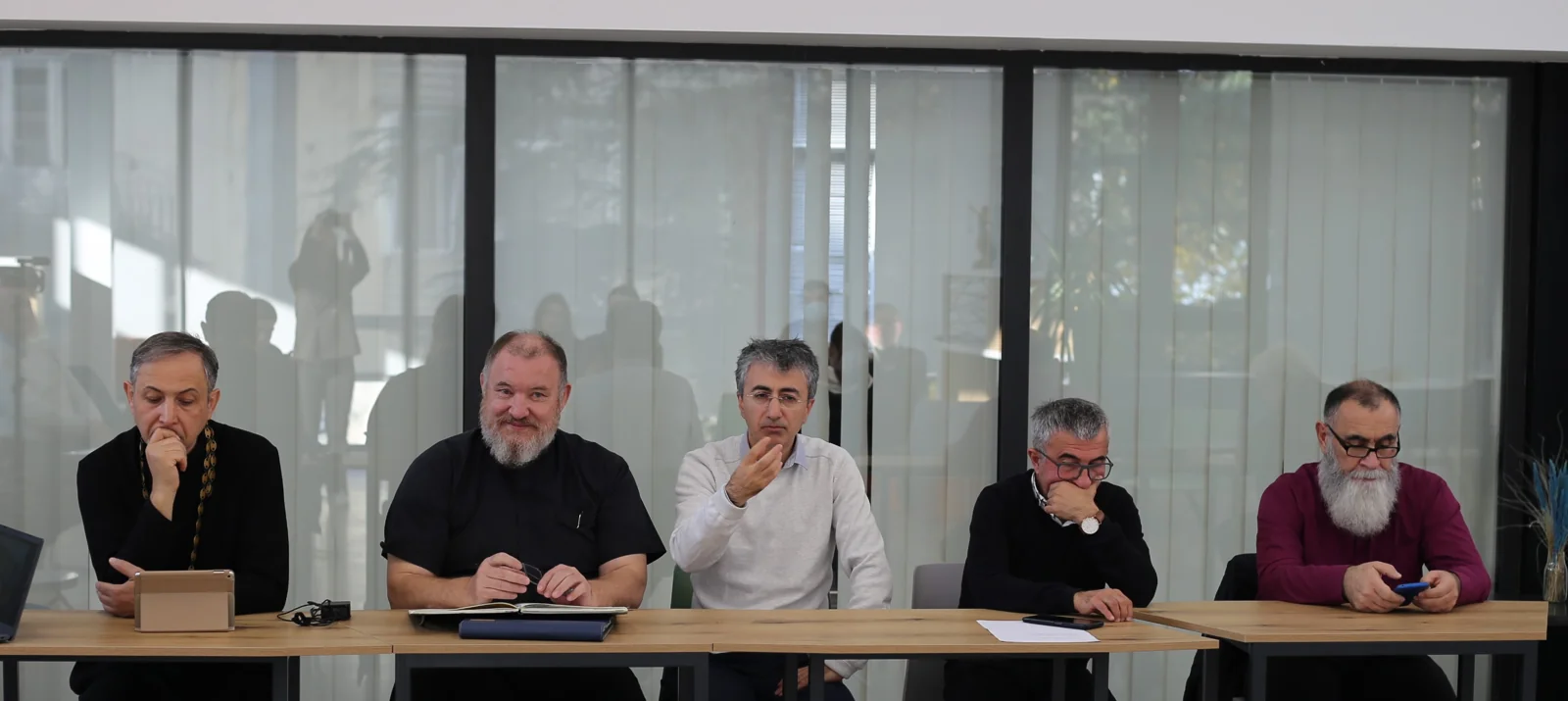
Discussion panel: “Catholic, Orthodox, and Protestant Understandings of Tradition.” George Tserodze represented the Orthodox perspective.
Event page ↗OPEN KNOWLEDGE & PROFESSIONAL COLLABORATION
Learn freely — or work with me
Core resources remain open to everyone. Paid collaboration is for those who need focused individual, group, or institutional work.
Open resources
For Georgian and international readers.
- Essays, books, and video lectures
- Thematic AI assistants
- Letters from the Future — new short-form material
Paid collaboration
Fees cover time, preparation, research, and professional intellectual work.
- Individual theological consultation on a text, idea, or research question
- Three complete courses with text, audio, and an online meeting
- Lectures, professional manuscript feedback, and research collaboration
Sessions are offered in Georgian or Russian. International collaboration is available through prepared English texts and, when needed, an interpreter.
Explore courses and enrol→Prayer, the sacraments, and ordinary pastoral care are never paid services.
MEMBERSHIP & SUPPORT
Take part in this work
Choose free letters, monthly membership, or one-time support. Contributions to the learning fund are used entirely for funded course places.
Letters from the Future
New essays, videos, and course news delivered to your inbox.
The Quiet Dialogue Circle
$10 / month- One new text or audio each month
- One private online dialogue
- Preferential course access
Members of my parish and our church community belong to this circle automatically and without a fee. They need only provide an email address to receive the letters.
SEND A REQUEST
Membership or support
Complete the form and submit your request directly here. You will receive payment options and exact instructions by email.
Contact
Continue the dialogue
For research collaboration, conference invitations, and public lectures: